... with a frog and a ladybird thrown in too!
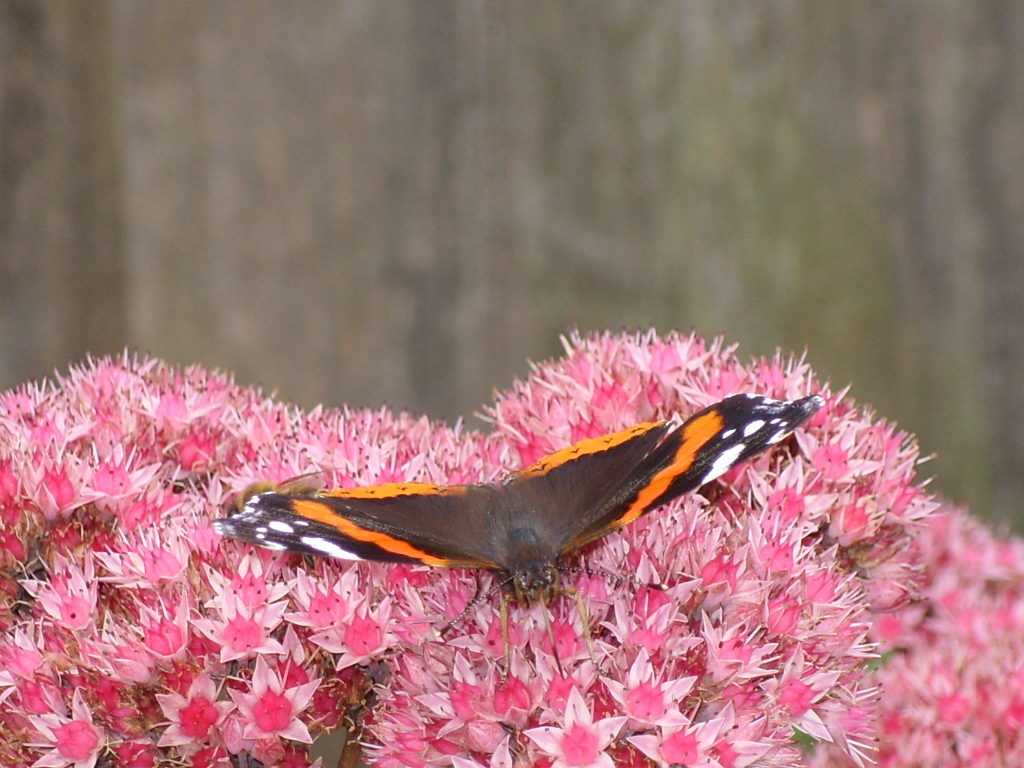
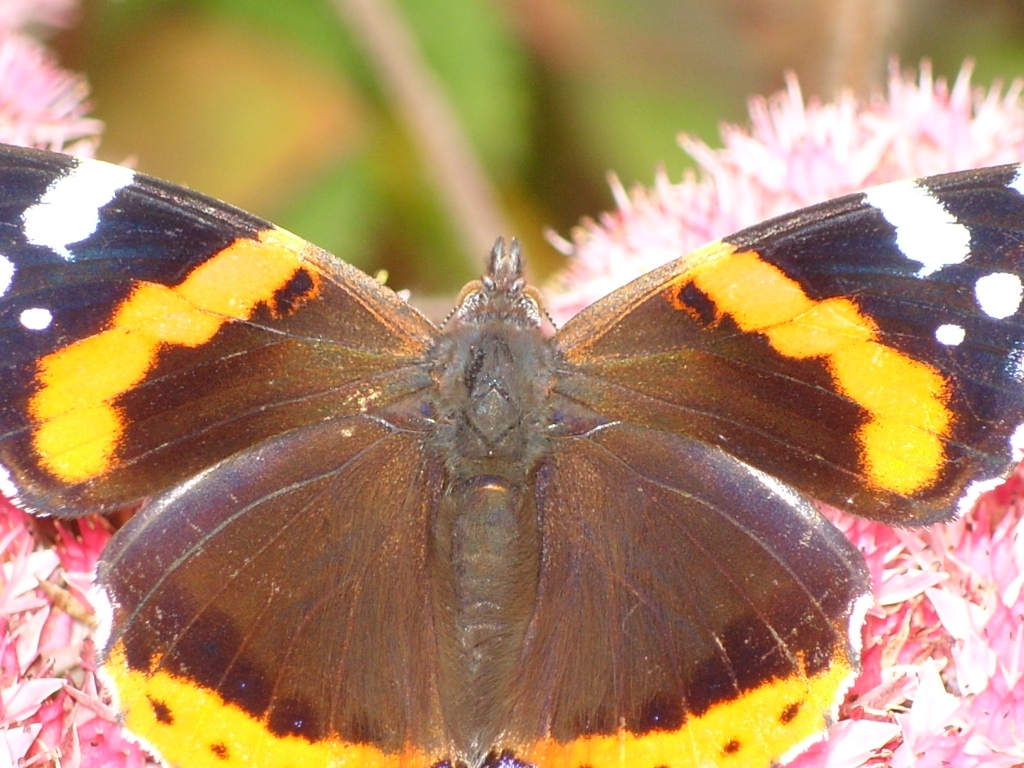
Last Sunday I was pottering in the garden, clearing up and getting everything ready for winter when I noticed the biggest Red Admiral butterfly I have ever seen on the blue scabius. When I went past to get my camera he fluttered away but came straight back to partake of the sedum instead.
At this time of year the sedum is in full flower and is covered in bees but the butterfly did not seem to mind. While I was taking the pictures a frog came to see what I was doing but did not stick around for long.
This may well use up half of my picture allowance but I had to share the pictures.
Enjoy!
Showing posts with label Bees. Show all posts
Friday, 30 September 2011
Monday, 14 June 2010
Bees and Borage
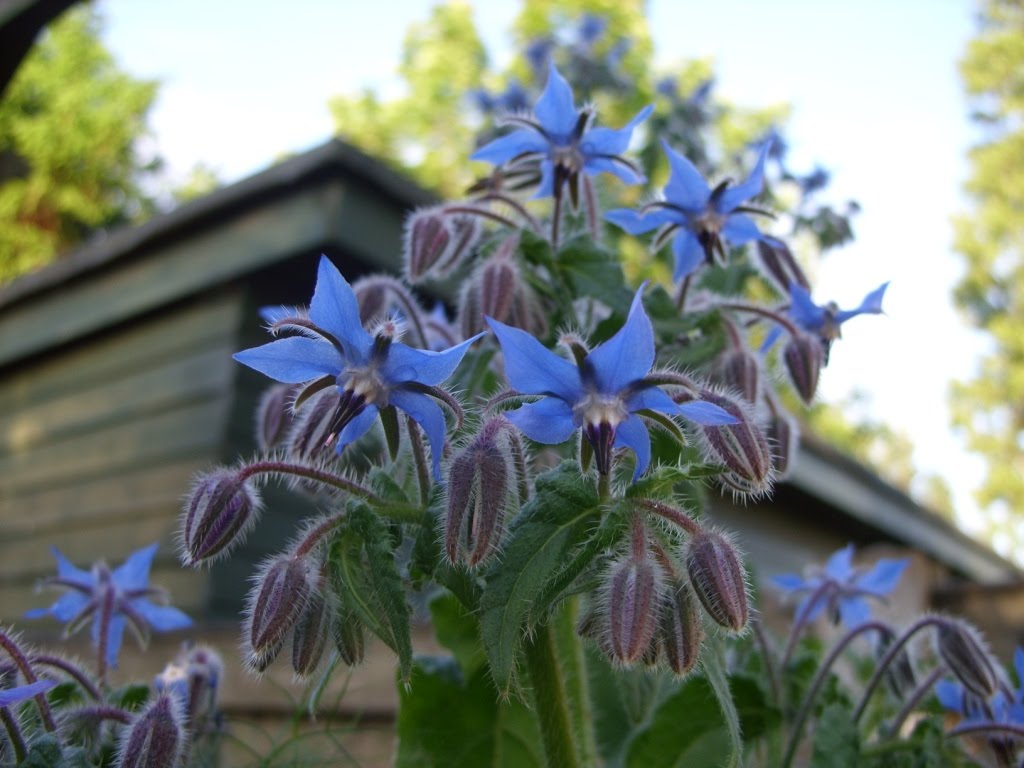
If you want to attract bees to your garden you can't do better than Borage. This lovely herb flowers before a lot of the main bee attracting plants and I've seen lots of very industrious bees visiting it this weekend.
I grew the borage from seed and it was the easiest thing to grow. They germinated in no time at all and grew with great enthusiasm. I planted them out in the herb bed at the start of May and they are now about a metre tall!
Borage originiated in Syria and was known and the starflower. The leaves are slightly hairy and smell like cucumber when crushed and from May onwards have these beautiful blue flowers. The flowers are sweet honey tasting and are one of the few blue coloured things in the plant world that can be eaten.
It can also be used as a companion plant to tomatoes, spinach, brassicas and even strawberries to protect them from pests.
I have five different types of Monarda (Bergamot) that will be out shortly which will bring bees from near and far but until they flower you can't go far wrong with the surprisingly exotic borage.
Borage originiated in Syria and was known and the starflower. The leaves are slightly hairy and smell like cucumber when crushed and from May onwards have these beautiful blue flowers. The flowers are sweet honey tasting and are one of the few blue coloured things in the plant world that can be eaten.
It can also be used as a companion plant to tomatoes, spinach, brassicas and even strawberries to protect them from pests.
I have five different types of Monarda (Bergamot) that will be out shortly which will bring bees from near and far but until they flower you can't go far wrong with the surprisingly exotic borage.
Labels:
Bees
Tuesday, 6 April 2010
Bumblebee first aid
I was pottering around the garden on Saturday when a beautiful bumble bee flew by and settled on the edge of one of my veg beds. When it was still there a few minutes later I ran indoors for my bumble identification chart, my camera and a few drops of sugar water.
The bee turned out to be a queen Bombus Lucorum and her royal highness was clearly exhausted. There are not the flowers around at the moment to give them energy on their travels and sometimes they need a little help.
After placing a few drops of sugar water in front of her, the bee delicately started to drink. She remained there for a few more minutes to get her strength back and then went on her way.
I always carry a little bottle of sugared water around during the summer months for emergency bee first aid but from now on I'll be carrying it in spring too. These beautiful creatures need all the help they can get.
For more information on bumble bees and how to distinguish from the six native species visit
http://www.bumblebeeconservation.org.uk/index.htm
The bee turned out to be a queen Bombus Lucorum and her royal highness was clearly exhausted. There are not the flowers around at the moment to give them energy on their travels and sometimes they need a little help.
After placing a few drops of sugar water in front of her, the bee delicately started to drink. She remained there for a few more minutes to get her strength back and then went on her way.
For more information on bumble bees and how to distinguish from the six native species visit
http://www.bumblebeeconservation.org.uk/index.htm
Labels:
Bees